Pre & Para Clinical
1. Department of Anatomy
Anatomy is the scientific study of structural organization of human body specially revealed by dissection. It includes appearance, position of various organs, vessels, nerves and their relations with each other.
Human body develops in womb of mother from a unicellular to multicellular organism. Stepwise intrauterine development of an embryo is studied in the embryology. The boney Skelton forms the supporting system for the body. The study of bones is taught under osteology. Complete anatomical orientation of human body is explored region wise, like upper and lower extremity, thoracic and abdomino-pelvic cavity. Head face and neck regions along with brain is studied separately. Microscopic study of organs, glands and various tissues is histology. The students are also introduced to basic principles of medical genetics.
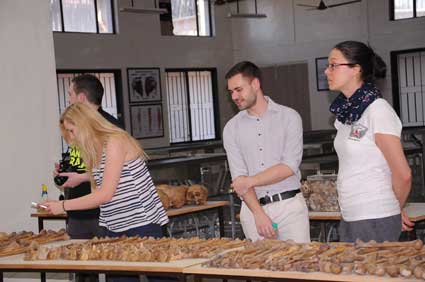
Dissection hall is spacious well ventilated and has 15 dissection tables to accommodate 100 students. Adjacent to dissection hall there is a facility for storage of cadavers; it also has cooling cabinets and embalming room. At present 20 cadavers are available. To facilitate the dissection and make it easy for students to understand sectional anatomy; bone and meat cutting machine is provided in the dissection hall. Articulated skeleton and loose bones are available for teaching and learning purpose.
A well illuminated histology laboratory is having adequate number of microscopes to teach microscopic features of various organs and tissues to the students. A well equipped preparation room is attached to this laboratory.
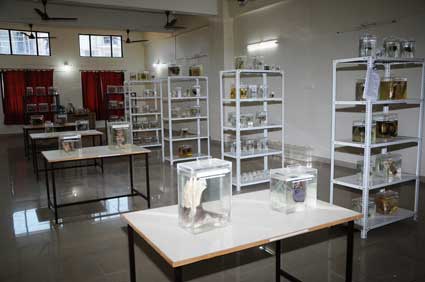
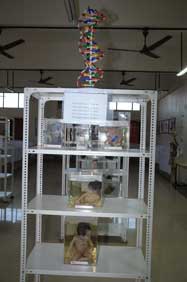
A systematically crafted and arranged museum is available for quick review. Region wise arrangement of Dry and wet specimens, Gross and embryology models, Histology slides with microscopes, Radiological films and wall mounted view boxes enables students to briefly revise the subject. There is attached room for the preparation of specimens and models.
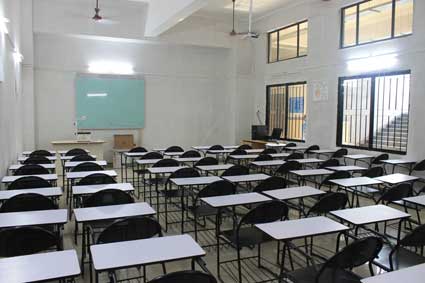
The department has two demonstration rooms with seating arrangement for 60 students with necessary audiovisual aids. There is a departmental library cum seminar room with adequate numbers of standard textbooks and reference books. A separate well equipped research laboratory for conducting departmental research activities is available.
2. Department of Biochemistry
Biochemistry is a vital pre-clinical subject for medical profession. It is the science that deals with chemical reactions associated with human beings. The knowledge of biochemistry is important to understand how the life begins. It is essential for understanding the molecular basis of health and effective treatment of diseases. The broad goal of the teaching biochemistry for undergraduate students is to orient them towards principles and applications of biochemistry in medicine. The biochemical techniques are used for diagnosis and solving clinical problems. The aim of Biochemistry department is to train the undergraduate medical students as per M. C. I. and M. U. H. S. University guidelines and provide quality clinical laboratory services to society at large.
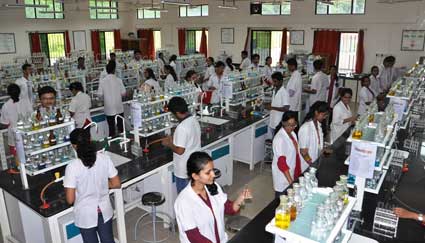
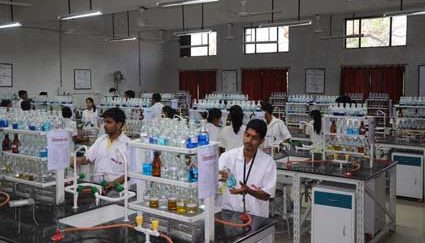
The department has spacious, well ventilated practical hall with preparation and store room. The departmental library has total 107 text books and reference books. The department has one demonstration rooms of 60 capacity each with LCD projector, OHP projector and sound system. There are various charts available in the department. The departmental research laboratory is well equipped with sophisticated instruments such as UV – VIS Spectrophotometer, Chromatography chamber, Electrophoresis apparatus etc.
There is separate round the clock biochemistry service laboratory well equipped with sophisticated instruments such as Electrolyte analyzer, Chemistry analyzer, COBAS C111, COBAS e411 analyzer for tumor markers, vitamins, hormones assays. The department participates in External Quality Assurance Scheme run by ACBI – CMC, Vellore.
3. Department of Human Physiology
Physiology is the science of life. Human Physiology studies organization, functions and regulation of various organ systems in the human body. Cardiovascular, Respiratory, Renal, Gastrointestinal, Endocrine, Reproductive and Central Nervous System are the major functional systems. Each of them has special functions important for life. All of them synchronize their functions in order to maintain ‘Homeostasis’; the state of physiological equilibrium. Deviation from this equilibrium is a day to day phenomenon and body restores the normalcy by various regulatory mechanisms. Sometimes, it fails to do so by internal or external reasons and we call it an illness or disease. So, to understand the disease process, principles of diagnosis and treatment comprehensive understanding of physiology is a must for medical students and professionals.
To make this task more interesting and informative, Department of Physiology has four specious and well equipped laboratories. The state of the art Hematology laboratory is equipped with microscopes, hemocytometers, hemoglobinometers blood grouping and Rh typing facility, centrifuge machines and required staining facilities for study of the blood components and cells.
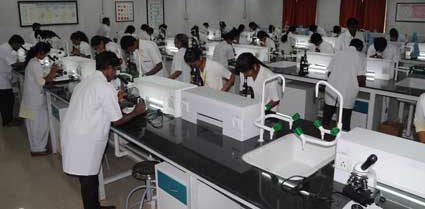
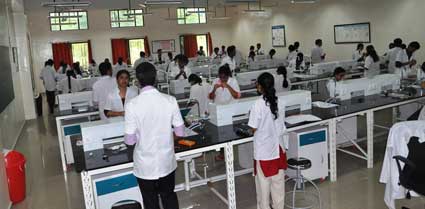
Amphibian laboratory is available in the premises of department. The experiments on the cardiovascular and musculoskeletal system enable students to understand various principles of these systems. To facilitate in-depth knowledge of students, the amphibian lab is having charts, dissection facility, kymographs, electronic stimulators, computers for showing the simulations and various apparatus required for performing amphibian experiments.
Mammalian laboratory is equipped with big and small dissection tables, big kymographs, respiratory pump, oxygen and carbon dioxide cylinders, required reagents and chemicals to perform the animal experiments.
The spacious, well illuminated and well ventilated clinical laboratory provides an opportunity to the medical students to get accustomed with clinical examination of the human subjects. Here students can learn the art and science of clinical examination. Laboratory is equipped with sufficient number of examination couches. Sphygmomanometers, stethoscopes and ECG machine for examination of cardiovascular system, spirometers, stethography machine for respiratory system examination , adequate facility as well as instruments are provided for learning the clinical skills for examination of central nervous system. Examination of four special senses Hearing, vision, taste and smell can also be learned using various instruments available in this laboratory.
A well equipped demonstration room, departmental library cum seminar room and research laboratory facilitates whole teaching learning process. Students well trained here become ready for clinical exposure once they go to second year of medical studies.
4. Department of Pathology
Pathology is the scientific field of diseases, which provides clinicians the reliable body of knowledge and background information so that they can safely recognize and describe diseases. Generally pathology deals with the deficiencies of cells and tissues, as well as with the defensive functions of the human body working against those shortcomings.
Department offers various diagnostic services in the field of hematology, clinical Pathology, histopathology and Cytopathology for which department is well equipped with Various automated instruments like fully automated Coagulometer for investigative profiles like coagulation profile, hematology analyzer, anaemia and leukemia profile. In addition to routine facility histopathology section offers the facility of Frozen Section for intraoperative diagnosis and decision making.
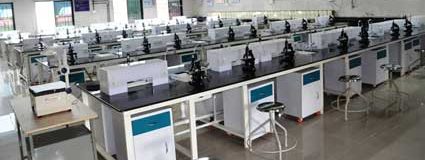
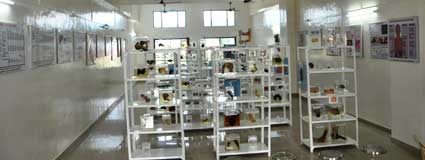
Pathology has roots in common with all other medical specialties, arising in antiquity when men reasoned about the physical ailments that afflicted them. For obvious reasons, those gross features of disease that were directly visible, either in life, or after death in funereal preparations, came first to notice resulting later in establishment of museum. At our spacious and well illuminated museum we have more than 150 mounted specimens and more than 150 wet specimens. The specimens have been neatly catalogued with microscopic images and compiling of differential diagnosis, thus providing an excellent tissue teaching data bank for the students.
The department runs a blood bank, 24 / 365 basis. It provides blood and blood components to the patients at subsidized rates.
The department has excellent teaching staff to educate the students about the abnormalities of human body so that they learn to correct them. Research is an integral to the ethos of the department & each faculty member is actively pursuing departmental research projects.
5. Department of Microbiology
Microbiology is the branch of Medicine that deals with diagnosis of infectious diseases, possible treatment and its control. It helps clinicians to choose antibiotics judiciously and aid in the control of antibiotic usage by definite testing methods and guiding the physician in the treatment.
The Department of Medical Microbiology at B.K.L. Walawalkar Rural Medical College & Hospital is an integrated team of investigators, educators and practitioners providing leading edge education, innovative research and expertise in Medical Microbiology/Infectious Diseases. The Department is a trusted authority providing timely and accessible information on current and emerging issues in Infectious Diseases. The Department is constantly developing new research initiatives in Infectious Diseases.
Key Features
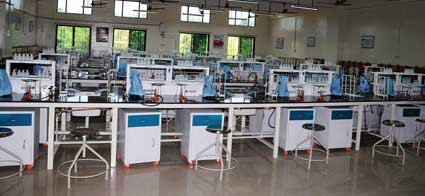
Situated on the 1st floor, the Department of Microbiology boasts of one demonstration room fitted with overhead projector to accommodate 60 students. The practical laboratory with benches is fitted with shelves, cupboards, sinks, water taps and light for microscopy, burners, gas, water and electric points, microscopes and a separate preparation room. There are separate service laboratories each for bacteriology, serology, virology, Parasitology, mycology, tuberculosis and immunology. Separate accommodation for media preparation and storage, autoclaving, washing and drying room with regular and continuous water supply is available. A state of art museum with charts, models are available for students. The Departmental library is unique in itself with more than 80 books. For research enthusiasts a separated Research Laboratory is provided.
Services offered
1. Bacteriology:
a. Services offered:
– Culture, identification of pathogens, Antibiotic Susceptibility Testing (AST) of isolates
b. Specimens tested:
– Blood: Automated BacT Alert system
– CSF and other body fluids
– Tissue/Biopsy material
– Exudates
– Catheters
– Faeces
– Urine Culture
– Sputum, Bronchoalveolar lavage (BAL), Endotracheal aspirates (ETA)
– Throat, Nasal and Ear Swabs
– Genital swabs
2. Parasitology:
– Saline and Iodine prep for stool ova & Cyst
3. Mycology:
– Microscopy & Culture
4. Mycobacteriology:
– AFB Staining
5. Serology:
Widal test, R.A Factor test, Hbs.Ag test, VDRL/RPR test, Leptospirosis, Brucellosis, Scrub typhus, HAV IgM , HEV IgM, CRP,
6. Virology:
– Immunocomb HIV-1 & 2 test, HCV, HbsAg test, Dengue IgM & IgG test, NS1 Ag-detection HCV, Chikunguniea,
7. Surveillance:
– Portable water and environmental surveillance, Critical care area surveillance, Microbiology sterility, sterility check of blood bags, solutions and sterilizers
6. Department of Pharmacology
Pharmacology is one of the important para-clinical subject for medical profession. It is the science which deals with the drugs. The objective of Pharmacology is mainly to provide such scientific data, using which one can choose a drug treatment of proven efficacy and safety from the various options available, to suit the patient. Pharmacology has an important role in pharmaceutical industry where drug discovery and clinical trials are all based on pharmacological principles.
Like the other medical subjects, the field of Pharmacology is also expanding with involvement of new areas such as pharmacovigilance, pharmacoepidemiology pharmacogenomics, pharmacoeconomics and so on.
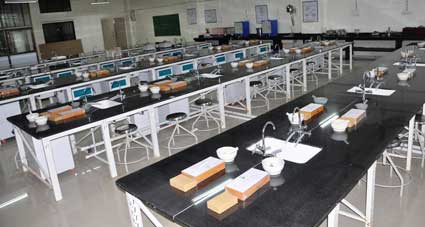
The department has air conditioned lecture hall provided with modern audio-visual aids. It has one demonstration room fitted with Over Head Projector, LCD projector, Slide projector, Television Video and other audiovisual aids, to accommodate 60 students in each.
The department has two practical laboratories with accommodation facility for more than 60 students in each for the following……
i. Experimental Pharmacology for animal experimentation to teach the effect of different drugs on various physiological functions of animals having the modern Equipments such as kymographs, physiograph, animal weighing machine, digital chemical balancing apparatus, and organ baths, etc.
ii. Clinical Pharmacology and Pharmacy with Equipments such as pill tiles, suppository moulds, pestle and mortar, iron spatula and tablet disintegration machine etc. for pharmacy practicals, also having the patient examination tables, BP apparatus, electrocardiograph etc. for the clinical pharmacological practicals.
It has Museum having specimens of various systemic drugs and crude drugs, photographs of medicinal plants, charts depicting the general and systemic pharmacology, various pharmacological models. Each specimen is labelled with 10 copies of catalogue for students. Museum is also having the separate section depicting “History of Medicine” having the posters of evolution of medicine and drugs.
It has also the Departmental Library – cum – seminar room with text and reference books. All books are having recent editions for easy and immediate reference for students making the subject easy.
The department has Research Laboratory for research purposes. It has instruments such as analgesiometer, electroconvulsiometer, actophotometer, rotarod assembly and Cook’s pole climbing apparatus etc. for research activities.
It also has the attached holding area for animal house. The department has additional animal simulator software for the teaching of animal experiments.
Key Features
– Training of undergraduates to inculcate a rational and scientific basis of therapeutics
– Well-qualified and experienced faculty
– Well equipped with library, computers, LCDs, laboratories and other resources
– Modern teaching methods practiced including computer assisted learning
– Curriculum is designed and reviewed as per MCI and MUHS guidelines
– Has attached holding area for animal house
– Research – basic and clinical as per the GCP/CPCSEA guidelines
– Animal simulator software
– Actively conducting adverse drug reaction (ADR) monitoring in coordination with the clinical departments for recording the ADRs
– Regular conduct of CMEs and workshops for students and faculty
7. Department of Forensic Medicine
Forensic Medicine is the science which deals with the medico-legal aspects of the medical profession. Forensic Medicine is the one more para-clinical subject for the second year M.B.B.S course.
The department will be teaching, both theoretical and practical aspects of, Forensic Medicine, Medical Jurisprudence & Medical Ethics as well as Toxicology to M.B.B.S. students. The objective of Forensic Medicine is to produce a physician who is well informed regarding the law in relation to medical practice and is capable of helping the Criminal Justice System in disbursement of justice. It is aimed to make students proficient in observing the principles of medical ethics in the practice of their profession. Students are taught to make observations and draw logical inferences from these observations in order to contribute scientifically to enquiries into criminal matters.
In addition, the department also teaches the Toxicology which gives knowledge of toxicology that enables them to treat the patients of poisoning.
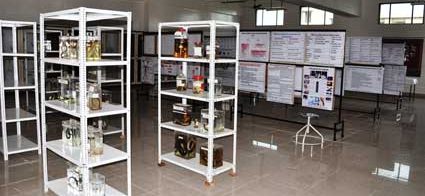
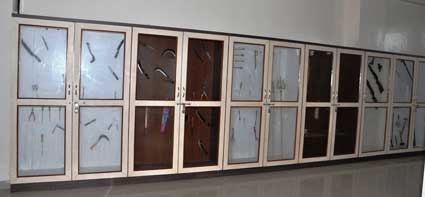
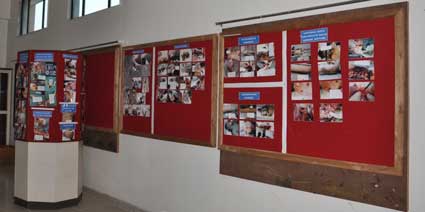
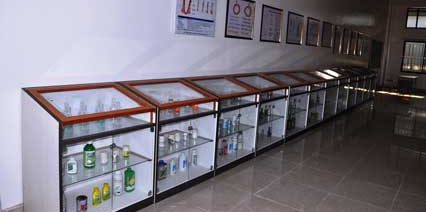
It has a museum to display medico-legal specimens, charts, models, prototype fire arms, wax models, slides, poisons, photographs etc. with seating arrangements for students. All the specimens are labelled and 10 copies of catalogues for student use are available.
There is a laboratory for examination of specimens, tests and Forensic histopathology, Serology, anthropology and toxicology.
It has an Autopsy room with facilities for cold storage, for cadavers, ante rooms, washing facilities, with an accommodation for students, waiting hall, office etc.
It has also the Departmental library-cum-seminar room with text and reference books and Research laboratory for research purposes.
8. Department of Community Medicine
The Community Medicine department aims to train undergraduate medical students primarily in a rural health, with a broad vision and perspective. It envisages to train students with a comprehensive rural health care approach through preventive, promotive, curative, rehabilitative and research oriented activities. The other activities of the Department are to conduct basic research, conduct training programs and to provide promotive, preventive and curative health services to the community, for the health and Welfare of the people.
The department consists of both teaching and non-teaching staff as stipulated by the Medical Council of India.
It has a demonstration room fitted with strip chairs, Over Head Projector, Slide projector, Television Video and other audiovisual aids, to accommodate 60 students.
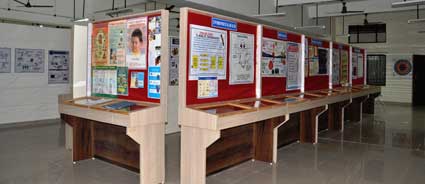
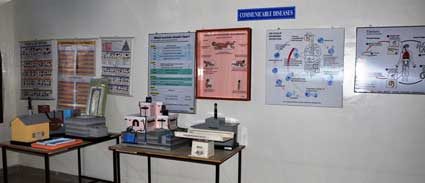
It has a museum to display specimens, charts, models, photographs etc. with seating arrangements for 20-25 students. There is Practical laboratory well equipped for practicals in community Medicine. It has also Departmental library-cum-seminar room and a well-equipped Research laboratory.
UHTC:
The Department of Community Medicine runs the Urban Health Training Centre (UHTC).The UHTC is situated at Chiplun , about 16 kms from the BKL Walawalkar Rural Medical College. The UHTC has an Out Patient Department (OPD) which functions every day. The OPD caters to the health care needs of the population of UHTC field practice area. This has facilities for patient examination, laboratory investigation and minor surgical procedures. The diagnosis and treatment of patients, including distribution of drugs is available at reduced cost.
RHTC:
The department of Community Medicine runs the Rural Health Training Centre (RHTC).The RHTC is situated at Dervan. The RHTC has an Out Patient Department (OPD) which functions every day. The OPD caters to the health care needs of the population of RHTC field practice area. This has facilities for patient examination, conducting minor surgical procedures and basic laboratory investigations. The diagnosis and treatment of patients including distribution of drugs is free.
RHTC has beds for Ante Natal Care for mothers and facility for conducting normal delivery. This is used extensively for undergraduate training as well as training of health care staff.
Click here to check the projects and activities carried out by the department
9. Department of Central Library
The medical college library has always a central position as the heart of an institution – both in terms of symbolically as well as physical placement. It is a “Temple of Scholarship.” To enter and use of library is considered as a privilege. The library reflects the values, mission, and goals of the institution.
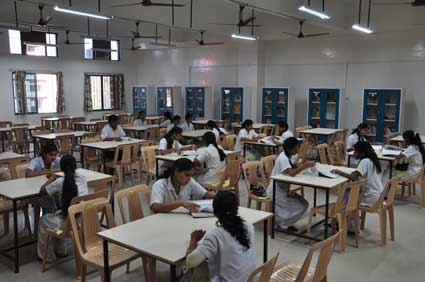
The central library is spacious well lighted and air-conditioned reading halls with sitting capacity of 200 students and 25 staff members. Total numbers of books are more than 8600. The library has 60 journals (42 Indian and 18 foreign). The digital library facility includes 25 P.C. with internet connectivity is available. In addition to this online M. U. H. S. digital library information free access for 13,000+ peer reviewed journals and 1300+ books is also available through internet. The library has collection of CDs and e-books. The library provides Xerox and Photo copy facility.